Is Your Social Media Helping Your Campaign... or Just Taking Up Time?
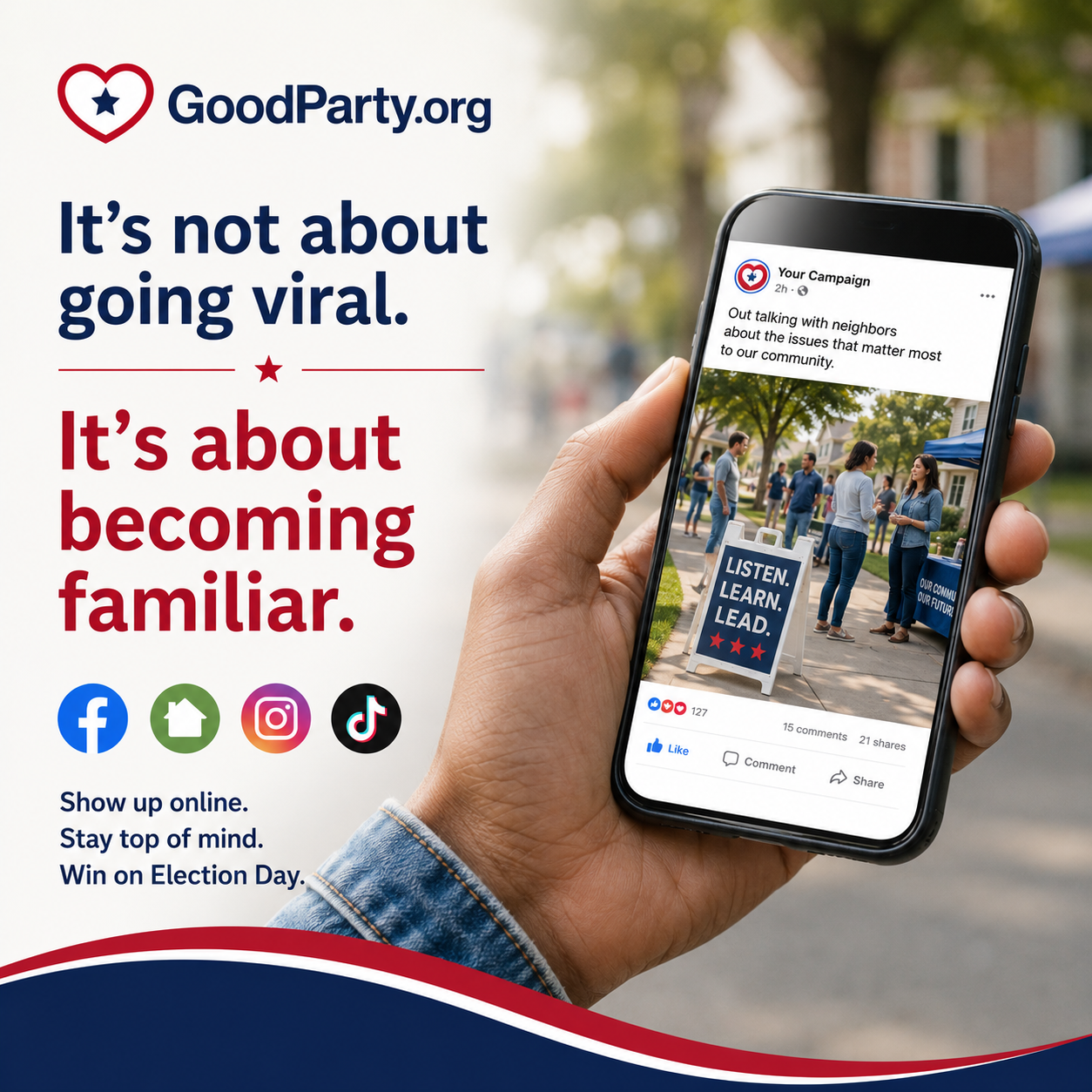
One of the biggest misconceptions in local campaigns is that social media is about going viral.
It isn't.
It's about becoming familiar.
Most voters in local elections will never attend a debate or campaign event. They may never meet you face-to-face. But they will scroll Facebook, Instagram, or Nextdoor.
That familiarity can make all the difference in a low-information race.
Here are a few strategies backed by both research and real campaign experience:
Focus on the platforms that matter.
Facebook remains the most important platform for most local races. About 71% of U.S. adults use Facebook, and it reaches many of the voters who turn out consistently in local elections. Join neighborhood groups, post consistently, and reply to comments. Engagement matters more than volume.
Nextdoor is one of the most overlooked tools in local politics. Nearly everyone who sees your posts is a neighbor and a potential voter. Participate as a community member, not just a candidate.
Instagram is great for reaching younger voters. Short videos, campaign moments, and behind-the-scenes content often outperform polished graphics.
TikTok still offers strong organic reach. According to Pew Research, 43% of adults under 30 regularly get news from TikTok. If younger voters are part of your coalition, it's worth experimenting.
What should you post?
The campaigns that perform best tend to share:
Behind-the-scenes moments from the campaign trail
Short videos explaining one local issue
Stories about why they're running
Helpful information like voter registration deadlines or early voting reminders
A good rule of thumb:
80% helpful, local, or personal content.
20% campaign asks like volunteering, donating, or voting.
One mistake that catches candidates every year
If you plan to run Facebook or Instagram ads, start Meta's political advertiser verification now.
The verification process can take several weeks, and many campaigns wait until the final month only to discover they can't launch ads in time.
What does the research actually say?
Studies are mixed on whether social media directly changes votes.
What it consistently does build is name recognition, trust, and familiarity.
Think of social media as a multiplier. Someone who met you while canvassing is much more likely to remember you if they've also seen your campaign showing up consistently in their feed.
We'd love to learn from each other.
If you've run a campaign before:
What worked surprisingly well on social media?
If you're running right now:
What's been your biggest challenge?
Share your experience below. Some of the best campaign advice comes from candidates who are figuring it out together.